Law 5099/2024 (Government Gazette 48/A/05-04-2024 available in Greek) designated the Hellenic Telecommunications and Post Commission (EETT) as the Digital Services Coordinator in the context of the Digital Services Act (DSA), with the following main responsibilities:
- Supervising compliance of intermediary digital service providers established in Greece with the Act.
- Imposing sanctions and fines for infringements of the Act,
- Handling complaints from users (both individuals and businesses) concerning violations of the Act.
- Collecting information from providers concerning compliance with the Act.
- Coordinating at national level and cooperating with other authorities for the implementation of the Act.
- Cooperating with Coordinators of other Member States and with the European Commission.
- Participating in the European Board for Digital Services.
- Designating entities as “trusted flaggers” for the purpose of reporting illegal content.
- Certification of out-of-court dispute resolution bodies.
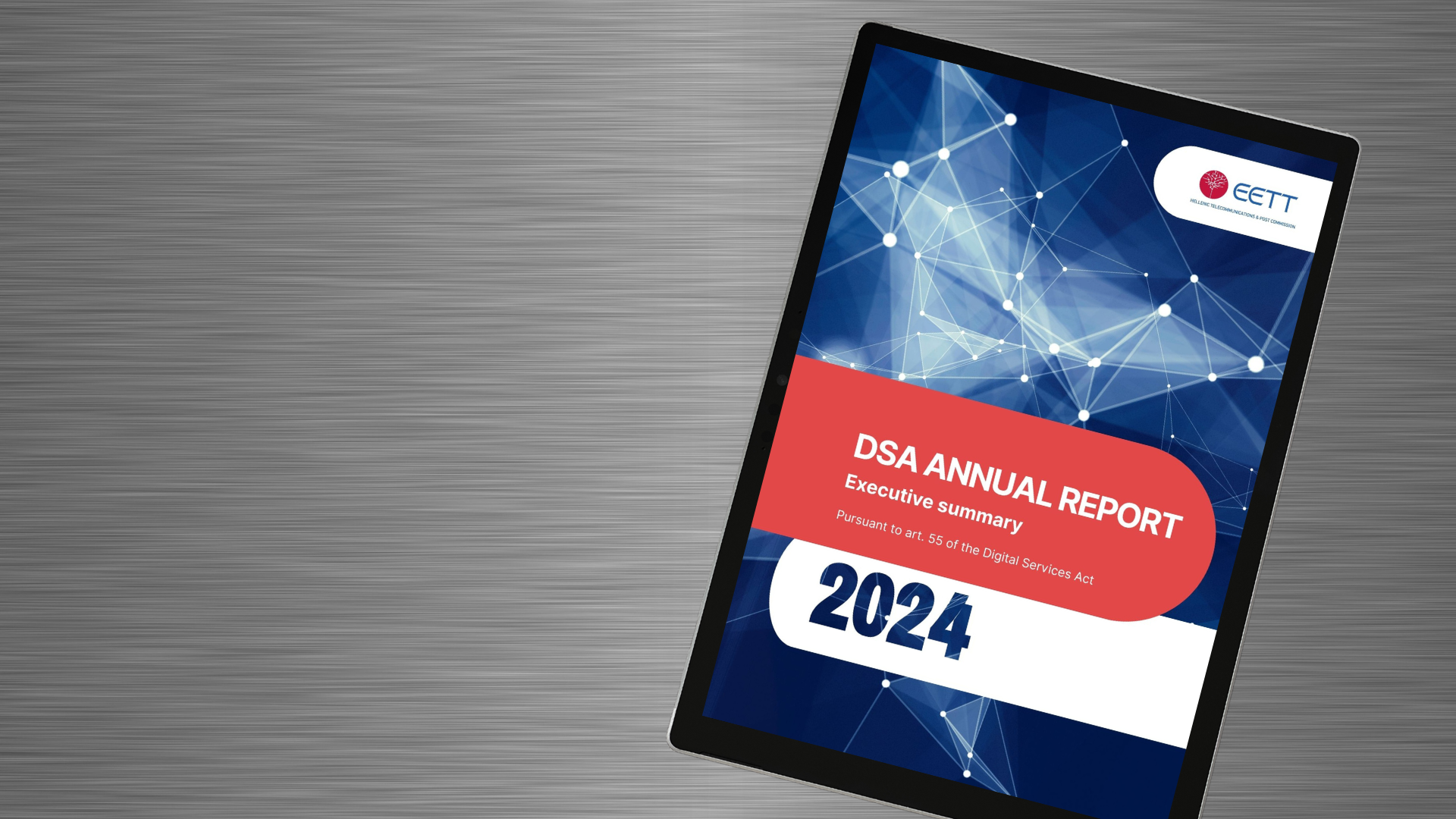
- Publication of the annual activity report under the DSA framework.
Important note
- EETT is competent to supervise providers established in Greece.
- EETT does not have the competence to assess or determine whether specific content violates national or EU legislation.
Apart from the Coordinator, Law 5099/2024 designates the following authorities as Competent Authorities with supervisory and enforcement powers over specific provisions of the DSA:
- National Council for Radio and Television (NCRT): Monitors compliance of providers with obligations related to the advertisements displayed on online platforms (Article 26, para. 1(a–c) and para. 2) and the adoption of measures for the protection of minors (Article 28, para. 1).
- Hellenic Data Protection Authority (HDPA): Monitors compliance of providers with obligations related to the information provided to users on the display and targeting of advertisements (Article 26, para. 1(d) and para. 3), and the protection of minors’ personal data (Article 28).
EETT is not responsible for the following:
- Resolving disputes between users and providers of intermediary digital services regarding illegal content.
- Examining applications for compensation against providers of intermediary digital services for any damage/loss caused to users due to an infringement of the Act.
- Receiving and handling complaints or appeals against decisions of providers of intermediary digital services related to illegal content. Please note that providers must inform users of the possibility to appeal against providers’ decisions on illegal content; failure to provide such information constitutes a violation of the Act.
- Infringements of e-commerce legislation (e.g., consumer protection in online transactions, illegal e-commerce of products or services). The competent authority is the Ministry of Development.
- Protection of personal data of users of intermediary digital services. The competent authority is the Hellenic Data Protection Authority (HDPA).
- Failure by video-sharing platforms to take measures to protect minors or the general public from harmful content, illegal hate speech, child pornography or racist crime. The competent authority is the National Council for Radio and Television (NCRTV).
- Receiving reports of criminal offenses committed via the Internet. The competent authorities are the Cyber Crime Division of the Hellenic Police and the Public Prosecutor’s Office.
- Handling general complaints unrelated to DSA violations but falling under other national οr EU legal frameworks.