
MENU
Search
CLOSE
-
ΕΕΤΤ
Back to MenuBack to: ΕΕΤΤ
- Who we are
- Responsibilities
- Strategy
- Structure
About EETT
- Electronic communications – Radio frequency spectrum
- Postal services
International collaborations
- Spectrum Monitoring System
- Satellite communications Spectrum Monitoring System
Operations co-financed by EU
-
Consumers
Back to MenuBack to: Consumers
- Responsibilities
- Information
- Code of Conduct
- Complaint handling
- Useful links
Telephony & Internet
- Responsibilities
- Information
- Complaint handling
- Useful links
Domain names
- Responsibilities
- Information
- Code of Conduct
- Complaint handling
- Useful links
Premium rate services
- Responsibilities
- About antennas
- Information Portal for Antenna Constructions
- Complaint handling
- Useful links
Antennas
- Responsibilities
- Information
- Complaint handling
- Useful links
Wireless devices
- Responsibilities
- Information
- Complaint handling
- Useful links
Spectrum use – Interference
- Responsibilities
- Complaint handling
- Useful links
Postal services
- Information
Trust services
- Responsibilities
- Information (available in Greek)
- Useful links
Digital television
-
Operators
Back to MenuBack to: Operators
- Responsibilities
- Legislative – Regulatory framework (available in Greek)
- Licensing
- Numbering
- Universal Service
- Market analysis (available in Greek)
- Rights of way
- Wholesale services
- Open Internet
- Trust services
- Domain names
Electronic communications
- Responsibilities
- Legislative – Regulatory framework (available in Greek)
- Radio spectrum licensing
- Antenna constructions
- Radio equipment
- Monitoring
Radio frequency spectrum
- Responsibilities
- Legislative – Regulatory framework (available in Greek)
- Licensing
- Universal Service
Postal services
- General information
- Responsibilities
Competition
-
Digital services
Back to MenuBack to: Digital services
- The Digital Services Act
- Responsibilities
- Categories of services
- Useful links
General information
- Obligations of providers
- Registry of intermediary services providers
- Transparency database
- Transparency reports
- Reporting suspicion of criminal offenses
Information for providers
- Trusted flaggers
- Out-of-court Dispute Settlement bodies
DSA Entities
- General information
- Access requirements/Conditions
- Data for investigating systemic risks
- Awarding procedure
- Data Access Portal
- Useful links
Researchers
-
Market Data
Back to Menu
- Reported data
Market Data
Back to: Market Data- General information
- Electronic communications
- Postal services
Reported data
-
Media/Publications
Back to MenuBack to: Media/Publications
- Press Releases
- Announcements
Press releases/Announcements
- Annual Report
- Market Review
- DSA Annual Report
- Information material
Publications
- 26th International Space Radio Monitoring Meeting-ISRMM
Conferences/Events
-
ΕΕΤΤ
- Who we are
- Responsibilities
- Strategy
- Structure
About EETT
- Electronic communications – Radio frequency spectrum
- Postal services
International collaborations
- Spectrum Monitoring System
- Satellite communications Spectrum Monitoring System
Operations co-financed by EU

Annual Report 2024: Summary of actions
EETT has published its “Annual Report 2024: Summary of actions” which briefly presents the authority’s work throughout the year.
View more -
Consumers
- Responsibilities
- Information
- Code of Conduct
- Complaint handling
- Useful links
Telephony & Internet
- Responsibilities
- Information
- Complaint handling
- Useful links
Domain names
- Responsibilities
- Information
- Code of Conduct
- Complaint handling
- Useful links
Premium rate services
- Responsibilities
- About antennas
- Information Portal for Antenna Constructions
- Complaint handling
- Useful links
Antennas
- Responsibilities
- Information
- Complaint handling
- Useful links
Wireless devices
- Responsibilities
- Information
- Complaint handling
- Useful links
Spectrum use – Interference
- Responsibilities
- Complaint handling
- Useful links
Postal services
- Information
Trust services
- Responsibilities
- Information (available in Greek)
- Useful links
Digital television
Annual Report 2024: Summary of actions
EETT has published its “Annual Report 2024: Summary of actions” which briefly presents the authority’s work throughout the year.
View more -
Operators
- Responsibilities
- Legislative – Regulatory framework (available in Greek)
- Licensing
- Numbering
- Universal Service
- Market analysis (available in Greek)
- Rights of way
- Wholesale services
- Open Internet
- Trust services
- Domain names
Electronic communications
- Responsibilities
- Legislative – Regulatory framework (available in Greek)
- Radio spectrum licensing
- Antenna constructions
- Radio equipment
- Monitoring
Radio frequency spectrum
- Responsibilities
- Legislative – Regulatory framework (available in Greek)
- Licensing
- Universal Service
Postal services
- General information
- Responsibilities
Competition
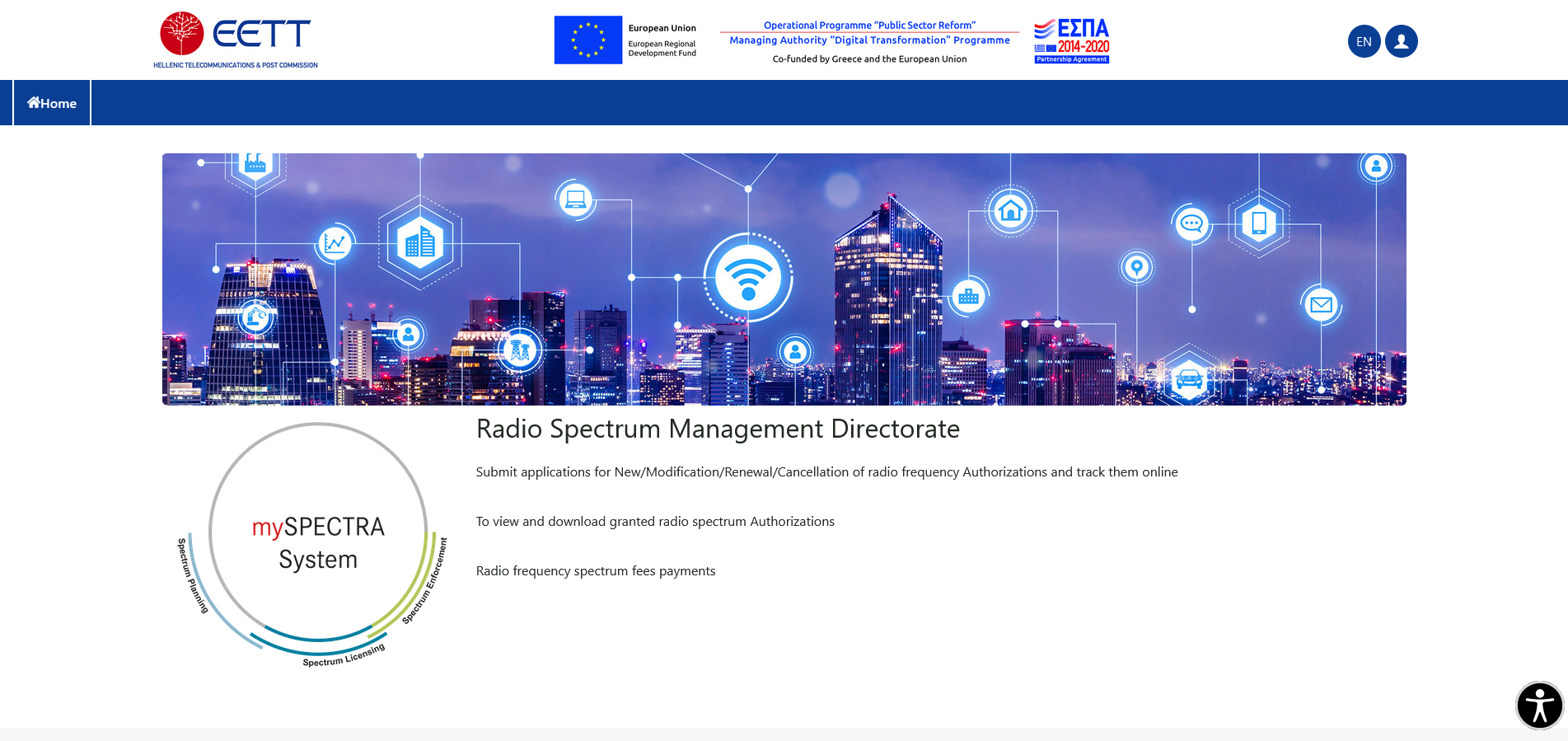
Announcement of the launch of the EETT’s Spectrum Management System
EETT announces the launch of the Spectrum Management System (SMS).
View more -
Digital services
- The Digital Services Act
- Responsibilities
- Categories of services
- Useful links
General information
- Obligations of providers
- Registry of intermediary services providers
- Transparency database
- Transparency reports
- Reporting suspicion of criminal offenses
Information for providers
- Trusted flaggers
- Out-of-court Dispute Settlement bodies
DSA Entities
- General information
- Access requirements/Conditions
- Data for investigating systemic risks
- Awarding procedure
- Data Access Portal
- Useful links
Researchers
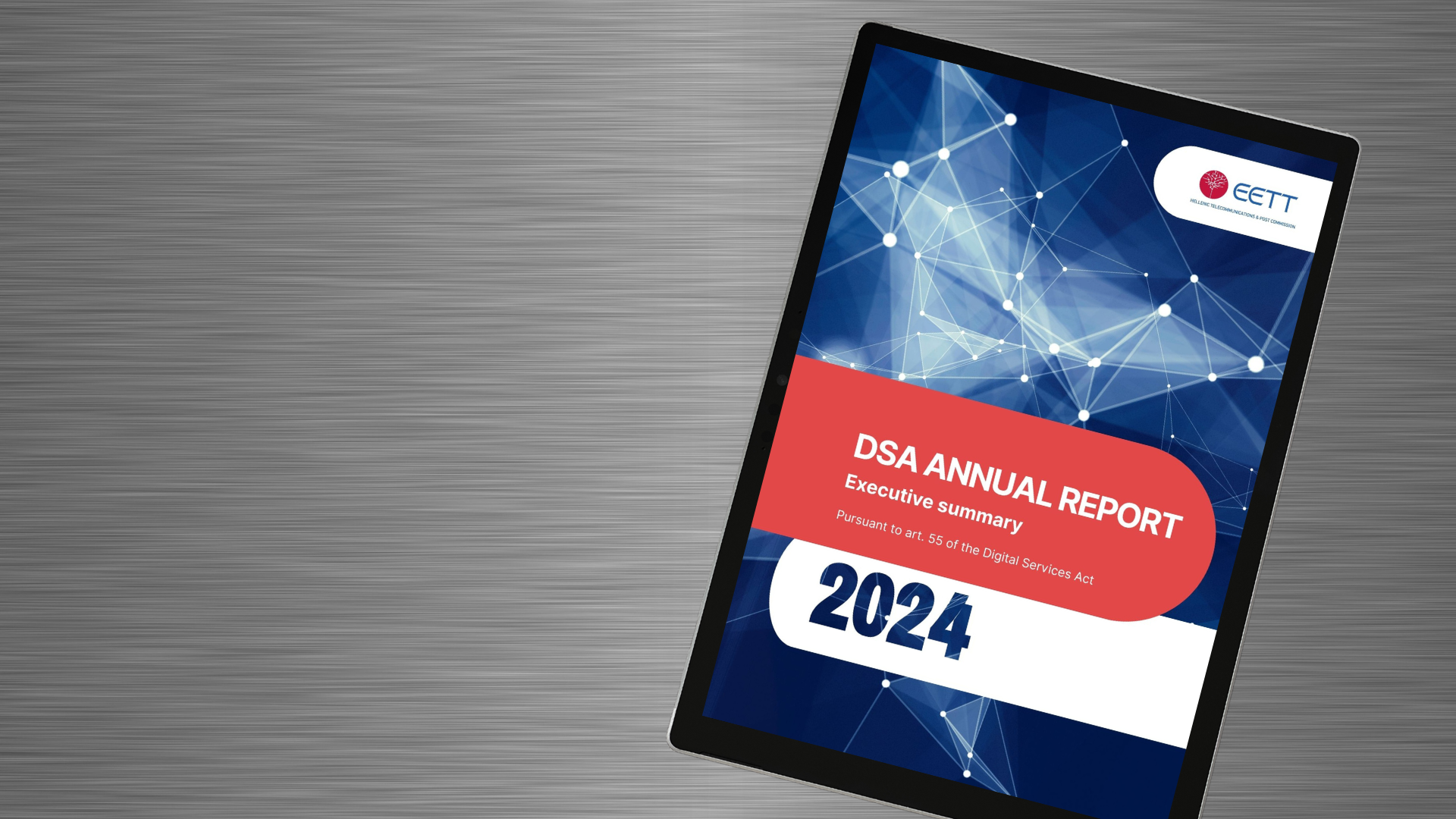
DSA Annual Report 2024
The DSA Annual Report provides a brief overview of EETT's actions in implementing the DSA Regulation in Greece in 2024.
View more -
Market Data
- General information
- Electronic communications
- Postal services
Reported data
Market review 2023 of electronic communications and postal services
The market review provides a detailed overview of the electronic communications and postal services markets in Greece during 2023.
View more -
Media/Publications
- Press Releases
- Announcements
Press releases/Announcements
- Annual Report
- Market Review
- DSA Annual Report
- Information material
Publications
- 26th International Space Radio Monitoring Meeting-ISRMM
Conferences/Events
Annual Report 2024: Summary of actions
EETT has published its “Annual Report 2024: Summary of actions” which briefly presents the authority’s work throughout the year.
View more