


Αγορών





Καταναλωτές

Πάροχοι

![Εικόνα - Σύνδεσμος προς βίντεο για Καταχώρηση domain name με κατάληξη [.gr] ή [.ελ]](https://www.eett.gr/wp-content/uploads/2023/09/domain_names_first_page.png)

ΚΛΕΙΣΙΜΟ
Σχετικά με την ΕΕΤΤ
Συνεδριάσεις Ολομέλειας
Διεθνείς συνεργασίες
Πράξεις συγχρ/νες από την ΕΕ
Τηλεφωνία & Διαδίκτυο
Ονόματα χώρου
Υπηρεσίες αυξημένης χρέωσης
Κεραίες
Ασύρματες συσκευές
Χρήση φάσματος – Παρεμβολές
Ταχυδρομικές υπηρεσίες
Υπηρεσίες εμπιστοσύνης
Ψηφιακή τηλεόραση
Ηλεκτρονικές επικοινωνίες
Φάσμα ραδιοσυχνοτήτων
Ταχυδρομικές υπηρεσίες
Στοιχεία Αγοράς
Απολογιστικά στοιχεία
Πλαίσιο δημοσίευσης στοιχείων
Δελτία τύπου/Ανακοινώσεις
Οπτικοακουστικό υλικό
Σχετικά με την ΕΕΤΤ
Συνεδριάσεις Ολομέλειας
Διεθνείς συνεργασίες
Πράξεις συγχρ/νες από την ΕΕ
Δημοσίευση Έκθεσης Πεπραγμένων της ΕΕΤΤ για το 2022
Δημοσιεύθηκε η ‘Έκθεση Πεπραγμένων για το 2022 η οποία παρουσιάζει το έργο της ΕΕΤΤ στους τομείς ηλεκτρονικών επικοινωνιών, φάσματος ραδιοσυχνοτήτων και ταχυδρομικών υπηρεσιών, καθώς και τις παρεμβάσεις της σε θέματα ανταγωνισμού.
ΠερισσότεραΤηλεφωνία & Διαδίκτυο
Ονόματα χώρου
Υπηρεσίες αυξημένης χρέωσης
Κεραίες
Ασύρματες συσκευές
Χρήση φάσματος – Παρεμβολές
Ταχυδρομικές υπηρεσίες
Υπηρεσίες εμπιστοσύνης
Ψηφιακή τηλεόραση
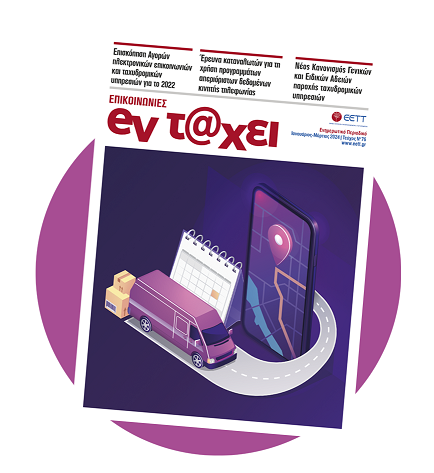
Ιανουάριος-Μάρτιος 2024 | Ν.76
Το «Επικοινωνίες εν Τάχει» είναι το τριμηνιαίο ενημερωτικό περιοδικό της ΕΕΤΤ. Περιλαμβάνει ειδήσεις και αρθρογραφία σχετικά με θέματα ηλεκτρονικών επικοινωνιών, ραδιοφάσματος, ταχυδρομικών υπηρεσιών και ανταγωνισμού.
ΠερισσότεραΗλεκτρονικές επικοινωνίες
Φάσμα ραδιοσυχνοτήτων
Ταχυδρομικές υπηρεσίες
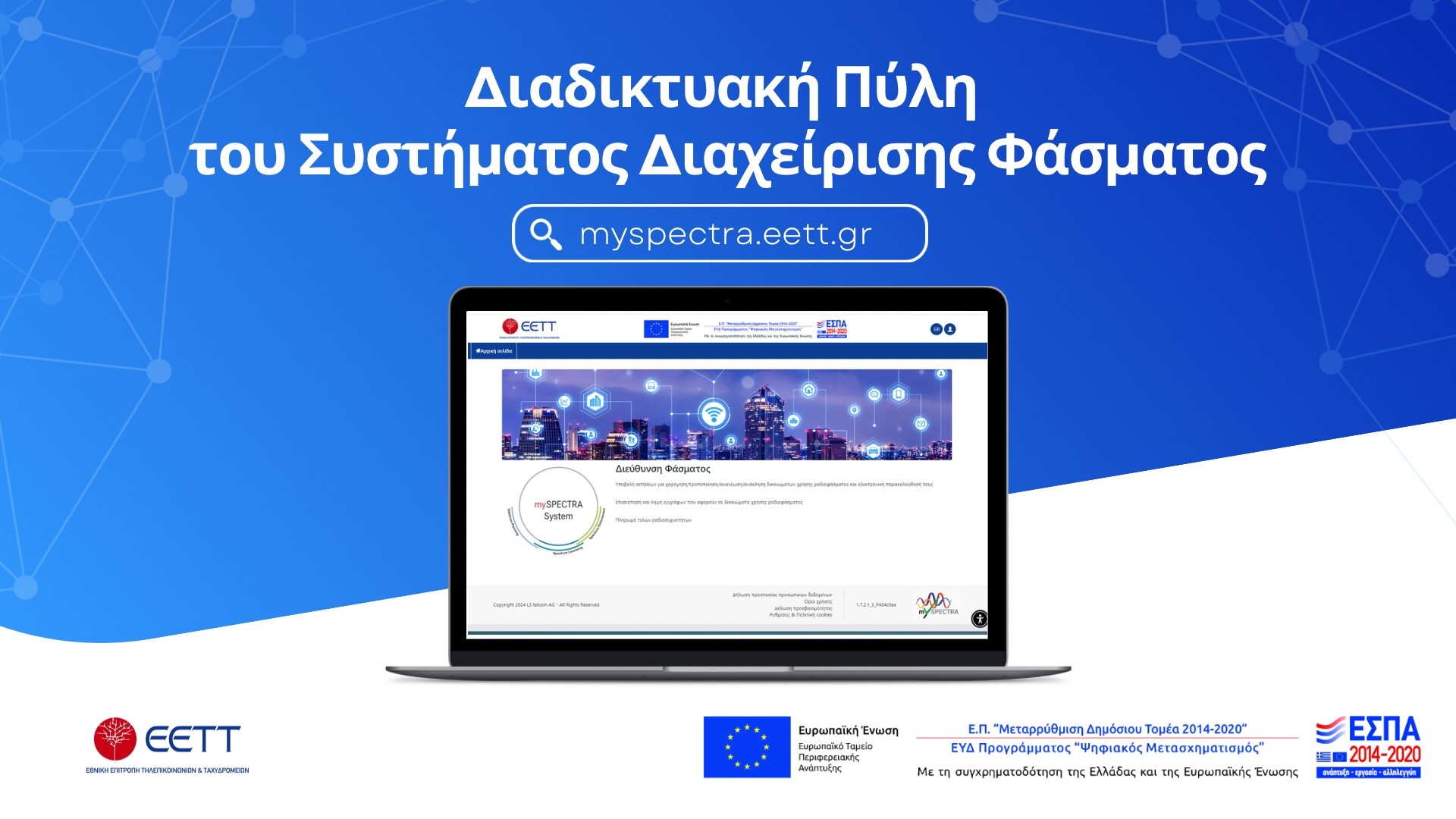
Έναρξη λειτουργίας του Συστήματος Διαχείρισης Φάσματος της ΕΕΤΤ
Η ΕΕΤΤ ανακοινώνει τη θέση σε παραγωγική λειτουργία του Συστήματος Διαχείρισης Φάσματος (ΣΔΦ).
ΠερισσότεραΑπολογιστικά στοιχεία
Πλαίσιο δημοσίευσης στοιχείων
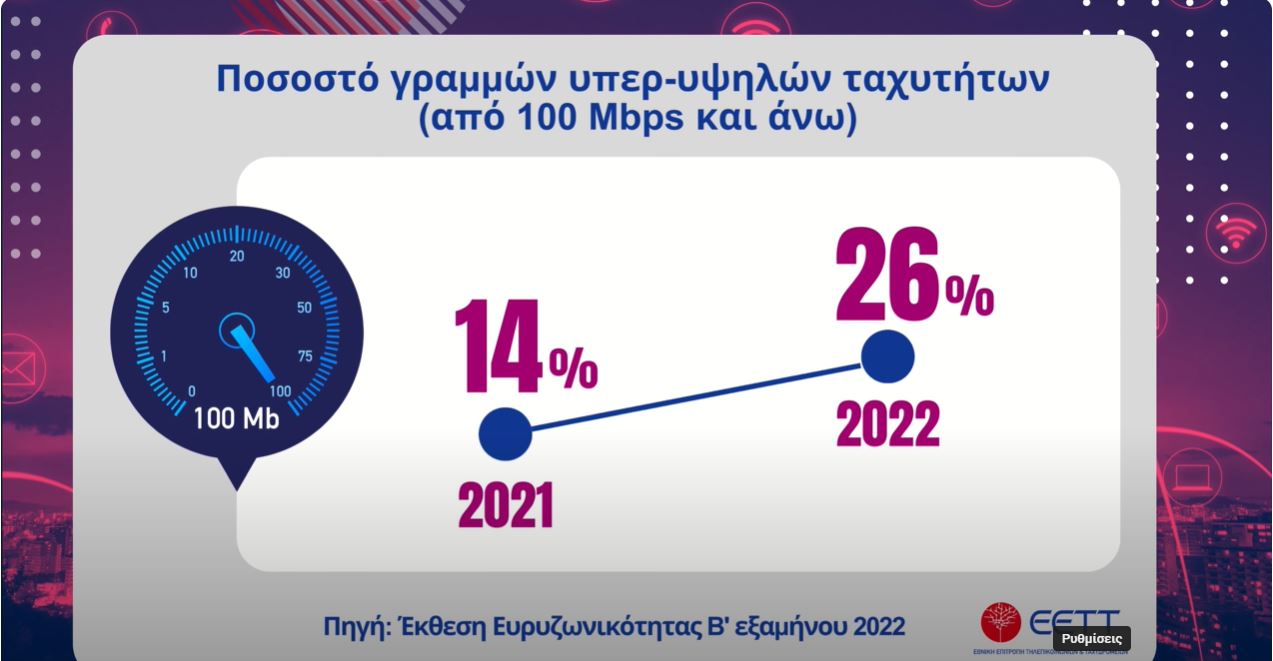
Επισκόπηση Αγορών ηλεκτρονικών επικοινωνιών και ταχυδρομικών υπηρεσιών για το 2022
Δημοσιεύεται η Επισκόπηση Αγορών για το 2022, η οποία αποτυπώνει αναλυτικά τα βασικά μεγέθη, τις τάσεις και το επίπεδο του ανταγωνισμού στις αγορές των ηλεκτρονικών επικοινωνιών και ταχυδρομικών υπηρεσιών στην Ελλάδα.
Περισσότερα
Ιανουάριος-Μάρτιος 2024 | Ν.76
Το «Επικοινωνίες εν Τάχει» είναι το τριμηνιαίο ενημερωτικό περιοδικό της ΕΕΤΤ. Περιλαμβάνει ειδήσεις και αρθρογραφία σχετικά με θέματα ηλεκτρονικών επικοινωνιών, ραδιοφάσματος, ταχυδρομικών υπηρεσιών και ανταγωνισμού.
Περισσότερα
Αναζητήστε πληροφορίες για τηλεφωνία και Διαδίκτυο, ονόματα χώρου, υπηρεσίες αυξημένης χρέωσης, κεραίες, ασύρματες συσκευές, χρήση φάσματος-παρεμβολές, ταχυδρομικές υπηρεσίες, υπηρεσίες εμπιστοσύνης και την ψηφιακή τηλεόραση.
Ενημερωθείτε για χρηστικά θέματα, Οδηγούς Καταναλωτή και Κώδικες Δεοντολογίας που εκδίδει η ΕΕΤΤ, καθώς και για τις αρμοδιότητές της.
Αναζητήστε απαντήσεις σε θέματα του άμεσου ενδιαφέροντός σας.
Σε περίπτωση που αντιμετωπίζετε πρόβλημα, ενημερωθείτε για τον τρόπο επίλυσής του.
Ενημερωθείτε για τις διαδικασίες αδειοδότησης, το νομικό πλαίσιο και τις αρμοδιότητες της ΕΕΤΤ. Αναζητήστε ως πάροχος πληροφορίες για τις ηλεκτρονικές επικοινωνίες, το φάσμα ραδιοσυχνοτήτων, τις ταχυδρομικές υπηρεσίες και θέματα ανταγωνισμού.

Ενημερωθείτε για θέματα όπως αριθμοδότηση, Καθολική Υπηρεσία, ανάλυση αγορών, υπηρεσίες χονδρικής και ονόματα χώρου.
Αναζητήστε πληροφορίες για τη διαχείριση και εποπτεία του φάσματος ραδιοσυχνοτήτων, τα κεραιοσυστήματα και τον ραδιοεξοπλισμό.
Παρέχονται πληροφορίες για την Καθολική Υπηρεσία και τις μετρήσεις ποιότητας, καθώς επίσης για θέματα ταχυμεταφορών.
Ενημερωθείτε για τον ρόλο και τις παρεμβάσεις της ΕΕΤΤ ως αρχής ανταγωνισμού.
© 2023 by EETT




| Cookie | Διάρκεια | Περιγραφή |
|---|---|---|
| cookielawinfo-checkbox-advertisement | 1 έτος | Αυτό το cookie ορίζεται από την προσθήκη συναίνεσης για τα cookie GDPR. Τα cookies χρησιμοποιούνται για την αποθήκευσ της συναίνεσης του χρήστη για τα cookies στην κατηγορία “Διαφήμιση”. |
| cookielawinfo-checkbox-analytics | 1 έτος | Αυτό το cookie ορίζεται από την προσθήκη συναίνεσης για τα cookie GDPR. Τα cookies χρησιμοποιούνται για την αποθήκευση της συναίνεσης του χρήστη για τα cookies στην κατηγορία “Ανάλυσης”. |
| cookielawinfo-checkbox-functional | 1 έτος | Το cookie ορίζεται από τη συγκατάθεση cookie του GDPR για την καταγραφή της συναίνεσης χρήστη για τα cookie στην κατηγορία “Λειτουργικά”. |
| cookielawinfo-checkbox-necessary | 1 έτος | Αυτό το cookie ορίζεται από την προσθήκη συναίνεσης για τα cookie GDPR. Τα cookies χρησιμοποιούνται για την αποθήκευση της συναίνεσης του χρήστη για τα cookies στην κατηγορία “Απαραίτητα”. |
| cookielawinfo-checkbox-others | 1 έτος | Αυτό το cookie ορίζεται από την προσθήκη συναίνεσης για τα cookie GDPR. Το cookie χρησιμοποιείται για την αποθήκευση της συναίνεσης του χρήστη για τα cookies στην κατηγορία "Άλλα". |
| cookielawinfo-checkbox-performance | 1 έτος | Αυτό το cookie ορίζεται από την προσθήκη συναίνεσης για τα cookie GDPR. Το cookie χρησιμοποιείται για την αποθήκευση της συναίνεσης του χρήστη για τα cookies στην κατηγορία “Επίδοση”. |
| CookieLawInfoConsent | 1 έτος | Καταγράφει την κατάσταση του προκαθορισμένου κουμπιού της αντίστοιχης κατηγορίας. Λειτουργεί μόνο σε συνδυασμό με το κύριο cookie. |
| elementor | πάντα | Αυτό το cookie χρησιμοποιείται από το θέμα WordPress του ιστότοπου. Επιτρέπει στον ιδιοκτήτη του ιστότοπου να εφαρμόσει ή να αλλάξει το περιεχόμενο του ιστότοπου σε πραγματικό χρόνο. |
| viewed_cookie_policy | 1 έτος | Το cookie ορίζεται από την προσθήκη GDPR Cookie Consent και χρησιμοποιείται για την αποθήκευση του εάν ο χρήστης έχει συναινέσει ή όχι στη χρήση cookies. Δεν αποθηκεύει προσωπικά δεδομένα. |
| Cookie | Διάρκεια | Περιγραφή |
|---|---|---|
| _pk_id.7.023f | 13 μήνες | Αυτό το cookie εγκαθίσταται από το Matomo και χρησιμοποιείται για την απόδοση ενός μοναδικού αριθμού στον επισκέπτη/χρήστη με σκοπό τον διαχωρισμό και την αναγνώριση του αριθμού των επισκέψεων. |
| _pk_ses.7.023f | 1 ώρα | Αυτό το cookie εγκαθίσταται από το Matomo και χρησιμοποιείται για την προσωρινή αναγνώριση της συγκεκριμένης επίσκεψης. |
| CONSENT | 2 έτη | Το YouTube ορίζει αυτό το cookie μέσω ενσωματωμένων βίντεο youtube και καταχωρεί ανώνυμα στατιστικά δεδομένα. |
| Cookie | Διάρκεια | Περιγραφή |
|---|---|---|
| VISITOR_INFO1_LIVE | 5 μήνες 27 ημέρες | Αυτό το cookie έχει οριστεί από το YouTube για τη μέτρηση του εύρους ζώνης που καθορίζει αν ο χρήστης βλέπει το νέο ή το παλιό περιβάλλον αναπαραγωγής. |
| YSC | περίοδος σύνδεσης | Αυτό το cookie ορίζεται από το Youtube και χρησιμοποιείται για την παρακολούθηση των προβολών των ενσωματωμένων βίντεο στις σελίδες Youtube. |
| yt-remote-connected-devices | πάντα | Αυτό το cookie χρησιμοποιείται από το YouTube για την αποθήκευση των προτιμήσεων βίντεο του χρήστη που προβάλει ένα ενσωματωμένο βίντεο YouTube. |
| yt-remote-device-id | πάντα | Αυτό το cookie χρησιμοποιείται από το YouTube για την αποθήκευση των προτιμήσεων βίντεο του χρήστη που προβάλει ένα ενσωματωμένο βίντεο YouTube. |
| yt.innertube::nextId | πάντα | Αυτό το cookie χρησιμοποιείεται από το YouTube για την καταχώριση ενός μοναδικού αναγνωριστικού για την αποθήκευση δεδομένων σχετικά με τα βίντεο από το YouTube που έχει δει ο χρήστης. |
| yt.innertube::requests | πάντα | Αυτό το cookie χρησιμοποιείται από το YouTube για την καταχώριση ενός μοναδικού αναγνωριστικού για την αποθήκευση δεδομένων σχετικά με τα βίντεο από το YouTube που έχει δει ο χρήστης. |
| Cookie | Διάρκεια | Περιγραφή |
|---|---|---|
| DEVICE_INFO | 5 μήνες 27 ημέρες | - |
| VISITOR_PRIVACY_METADATA | 6 μήνες | - |

Αναζήτηση